Saturday, February 29, 2020

When READ is a Four-Letter Word


Imagine for just a second that you HATE reading. You see it only as something required for school, instead of an enjoyable activity that brings you knowledge, escape, freedom, entertainment, or examples of gorgeous writing. Chances are this negativity toward reading has been affecting your grades, and probably your behavior, since elementary school. Because when other students are working on assignments independently, you can’t do it, get frustrated, and become gifted at using avoidance techniques. Then adding insult to injury, when you advance to middle school you have an elective taken away…a fun class like art, teen living, tech ed, or coding…so that you can spend 50 minutes of your day being forced to do something that you hate. Needless to say, at the beginning of the year, there are some VERY hostile feelings when students are placed in a reading intervention class.

So, I think it is extremely important to combat some of that negativity starting on Day 1. I spend a lot of time at the beginning of the year getting to know my students. We complete surveys about our lives, our attitudes about reading and writing, and our reading preferences. We also complete identity webs (Check out Being the Change by Sara K. Ahmed). I say we, because anything I ask the students to complete, I do myself. I believe that relationships are key in our classroom. The students need to know that they can trust me, especially when they are likely coming at reading from a vulnerable standpoint.

Another important key to my students’ success is that I am a self-proclaimed, proud book nerd. There is no way that I could serve as a reading teacher without being a reader myself. As Carol Jago stated in a recent article, “When teachers tell stories from their own reading lives about books they have read again and again, about books they have abandoned, about books that made them cry, students will wonder if there might be something between those pages for them.”

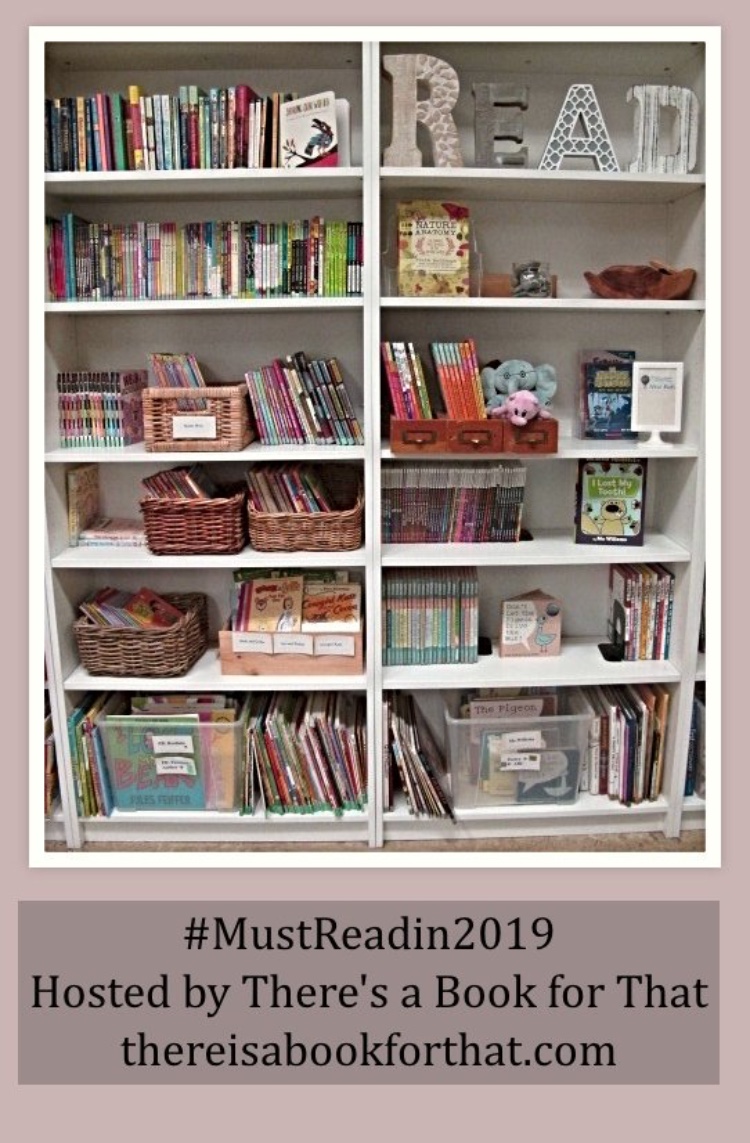
We have a classroom library of over 500 titles at different reading levels, including picture books, graphic novels, story anthologies, novels in verse, fiction and nonfiction. Students have time every single day to read a book that THEY choose. If our classroom library doesn’t have what they need, we are blessed with a beautiful, functional, fully staffed school library. We participate in book passes, book talks, read-alouds, and book trailers. We watch YouTube videos of authors reading chapters from their own books. And this year for the first time, thanks to #kidsneedmentors, we had an author visit our classroom! 


It's not always as simple as giving a child a book and saying, "Here...read this." I ease the students into a reading routine starting the first day of school. After a book pass, we read for five minutes to see if the book is a good fit for them. Then we work up to 10 minutes. It is possible to have classes read for up to 20 minutes, but after an extended break, we usually need to start building up reading stamina all over again.

Every day, students enter our room and read the agenda posted on the board. There is a reminder at the top that for the first 15 minutes, the classroom is device-free. This is dedicated daily independent reading time. Sometimes students read books independently, sometimes with a partner or small group. We have tried many different strategies to keep track of our reading, but what works the best for us is Status of the Class. (Check out The Reading Zone by Nancie Atwell and Reading in the Wild by Donalyn Miller). Basically, I keep a list for each class of the book titles each student is reading and their page numbers. This cuts down on the time it takes for students to figure out what page they left off on and allows me to quickly see how long it takes them to get through their books. 

A few years ago, I started using Donalyn Miller’s 40 Book Challenge. This is a way for students to examine different genres and find out what they like/dislike. I have adapted the genre choices a little each year, based on what is popular with our classes. It’s also super important to have books of varying lengths because the majority of my kiddos are overwhelmed by chapter books at first. Even when I’ve read aloud from novels in verse like Swing by Kwame Alexander and show them how much white space there is on each page, I am met with, “That’s too LONG!” 

I would LOVE to be able to tell you that with all of these strategies firmly in place in our room starting on Day 1, all of our students find a book they are interested in and jump right in and read. But, this is not always the case. We’re trying to overcome what could potentially be YEARS of negative feelings about reading. It's hard work. And here’s a little something I've learned…you can force students into intervention, but you can’t make them read. They legitimately have to WANT to. Sometimes a victory is a student who has never before read a book on his/her/their own finishing one book in a school year. 

Our students deserve the gift of daily reading time with access to books that they choose for themselves, because it is absolutely the best practice for helping our young people become self-sufficient readers. 

Saturday, February 22, 2020

We Really Need a Strong Foundation


In a recent leadership meeting, we participated in the Spaghetti Marshmallow Tower Challenge. The winning team had to construct the highest free-standing tower that could support a marshmallow sitting on top, using only spaghetti and masking tape. We had 15 minutes to complete the task. Our team completely agreed that the base needed to be strong in order to support the weight. The height of the tower depended on the strength of the foundation. As far as the actual structure, well…. Let’s just say that we did not win. I’m going to be totally honest with you…I lost interest in the task pretty quickly. It was challenging, and I really didn’t have any interest in struggling with it. At one point I actually said, “I’m sorry. I stopped caring a couple minutes ago.”

The week prior to the marshmallow challenge, we were asked to complete a walk-through of a colleague’s classroom. I visited a social studies class. The students were reviewing for their upcoming unit test. The teacher had divided the class into groups, using data acquired from previous classwork. The directions for each task were on the board for reference. The teacher specified directions before students rotated to the next activity. It was a beautifully planned and executed lesson.

It just so happened that one of my reading intervention students was in this class. His first activity was working on a computer program (read an article, answer some questions). He raised his hand because he was having trouble with a multiple-choice question that was asking for a synonym of the word “decision”. He couldn’t read the word. I read the question aloud to him, and he immediately clicked “choice”. His next activity was an independent walkabout that matched people and terms to their correct descriptions. Students were to read clues posted at different spots in the room, then walk to the correct answer in order to receive their next clue. The rest of his group chose a clue and took off in different directions. My student just kind of stood there. He was looking at the clues and glancing down at his notes. By all appearances, he was fully engaged in the task. But in reality, he was at a complete standstill.

So, what did I take away?

Just like the height of that spaghetti tower, our students’ learning is solely dependent on what kind of foundation is in place. My student did not have the necessary foundation to be successful in that classroom on his own. That thoughtfully planned, beautifully constructed, and well-executed lesson was inaccessible to him. And the truth that no one seems to want to talk about is that this problem is not just isolated to one or two kids in a class. A strong literacy foundation is missing for SO many of our students. Imagine for a moment trying to make it through a school day when you are unable to read or write about the materials being presented. What I see happening on a daily basis is the students’ response becoming, “I’m sorry. I stopped caring a couple minutes (or months or years) ago.” 

We need to do better. 


Saturday, February 1, 2020

My Journey as a Literacy Teacher


My career began in January 1998 when I was a student teacher. I graduated in May and worked as a substitute teacher and private reading tutor. My first full-time position was as a Title 1 assistant in a first-grade classroom. The next year when the Title funds shifted, I was moved to the middle school. And I have been there ever since! So although my undergrad degree was Elementary K-6, and I intended to be an elementary school teacher, I have spent pretty much the entirety of my career with middle school kiddos. 

While working as an assistant, I began a Master’s program in reading. I obtained certification as a reading specialist, and a Master’s Degree in Reading K-12. I taught 6th grade reading in a middle school where reading and English were taught as two separate subjects—I focused on reading comprehension and vocabulary while my teaching partner focused on grammar and writing. In 2005 I relocated to Virginia when I accepted a position as a middle school reading specialist. I co-taught English with special education teachers in grades 6-8. In 2007 I began my new assignment as a reading intervention teacher in grades 6-8. I have been working predominantly with students who have difficulty with/have no interest in/would rather be doing anything BUT reading for 20 years. So, this is the lens from which I view the educational system.

I don't just say this to impress my students...I also really do love to learn. I read professional books each year because I didn’t want to fall out of the loop once I finished grad school. Below are books that have greatly impacted my classroom practice and beliefs. 


If you ask people who have worked with me, they will tell you how dedicated I am to literacy instruction. I am an avid reader myself, and I want nothing more than for my students to love reading as much as I do. I have also formed some strong opinions about the best practices for our students. At a recent conference, I was reminded that if we are brave enough to state things in private conversations in the hallway or workroom, we need to be brave enough to say them out loud in public. So before I begin to do just that, I wanted to give you a brief glimpse into how my ideas have been shaped.


Monday, January 13, 2020

#MustReadin2020


#MustReadin2020
Hello, readers!

We have a brand new decade of reading to look forward to! 📚

I’ve committed to the following titles in my super-official Pic Collage graphic. But as usual, once I published my goals, I decided that there were other books that I want to include. 

So, just like with #MustReadin2019, I will also be writing about additional titles that I read and want to recommend.


Allies by Alan Gratz


The Ballad of Songbirds and Snakes by Suzanne Collins
Publication Date: May 19, 2020


Black Brother, Black Brother by Jewell Parker Rhodes
Publication Date: March 3, 2020

The Boy at the Back of the Class by Onjali Q. Rauf

Children of Virtue and Vengeance by Tomi Adeyemi

Count Me In by Varsha Bajaj


An Indigenous Peoples’ History of the United States For Young People
by Roxanne Dunbar-Ortiz; Adapted by Jean Mendoza and Debbie Reese

Maybe He Just Likes You by Barbara Dee


Scythe by Neal Shusterman

Stamped by Jason Reynolds and Ibram X. Kendi
Publication Date: March 10, 2020


What Lane? by Torrey Maldonado
Publication Date: April 14, 2020


Yes No Maybe So by Becky Albertalli and Aisha Saeed
Publication Date: February 4, 2020

Saturday, January 4, 2020

#MustReadin2019 Year-End Update


Happy New Year, Readers! 📚
I'm a little late with my year-end update. This was my original list. Since my last post, I only had
Grenade and Children of Virtue and Vengeance (published on December 3) still to read. 


#MustReadin2019
Finished reading November 12, 2019


In the grand tradition of Alan Gratz titles, Grenade gutted me. The book begins on April 1, 1945. Hideki, a member of the Blood and Iron Student Corps (middle school students forced to fight for their country), is handed two grenades at graduation. One is to throw at the “American monsters”. “Then, after you have killed as many Americans as you can…you are to use the other grenade to kill yourself” (9). Ray Majors is an American Marine from Nebraska. To distract himself during the nauseating boat ride, he goes through his supplies. “Flashlight, pistol, canteen, first aid kit, extra cartridges for his M-1 rifle…And then there were the grenades. Two of them” (12). The book alternates between these two characters’ experiences. While I listed several favorite quotes in my reading journal, I don’t want to include any spoilers. Prepare yourself for several punches to the gut (I gasped aloud several times), and some heart-pounding situations, and DO NOT SKIP the author’s note! 

Finished reading November 26, 2019
This unexpected gem came to me by way of a Twitter giveaway from the author, Suzanne Nelson. I absolutely adored A Tale Magnolious! An orphan named Nitty Luce saves an elephant, The Great Magnolious (“Mag”), from her execution. They end up at the home of Windle Homes in a town called Fortune’s Bluff. It turns out the mayor of the town, Neezer Snollygost, doesn’t really have the townspeople’s best interests in mind. With some new friends, Nitty tries to help everyone she meets and save the day. BUT, there are SO MANY obstacles in their way…not the least of which are the catastrophic dust storms that threaten the entire town. The friendship between Nitty and Mag is heartwarming and kept me reading and sharing parts of the book with my students. This was my first book by Suzanne Nelson, and I look forward to reading more!

Takeaway quote: “Trying isn’t a small thing. Especially when everybody around you is giving up” (58). 

Finished reading December 19, 2019

I had heard wonderful things about Song For A Whale by Lynne Kelly on social media, so I purchased a copy for my classroom library, and it was my last MG book of 2019. This is a story about Iris, the only deaf girl in her school. One day in science class she learns about a whale named Blue 55. Iris feels a connection with him because 55 is unable to communicate with other whales. So, she works with Mr. Russell, the music teacher, and the band students to develop music that is in 55’s frequency. “We had the song that would tell 55 someone was out there” (87). The problem? Now Iris has to figure out how to play her song so that the whale can hear it. I especially enjoyed Iris's relationship with her grandmother, who is also deaf.

Takeaway quote: “Sound can move anything if it’s strong enough” (269).


Children of Virtue and Vengeance by Tomi Adeyemi was SUPPOSED to be my last book of the #MustReadin2019 challenge. I bought it the day it was published, but unfortunately was unable to read it before the year ended. Also, I’ve decided that I need to reread Children of Blood and Bone before diving into this one. 

So, sadly, I didn’t complete my challenge for 2019. However, with my adult book club choices, Project LIT Book Club titles, and the books I read just for me, it was definitely another fantastic year of reading!


Saturday, September 14, 2019

#MustReadin2019 Fall Update


Hello, Readers! 📚

So, just to review, here is my original list:
#MustReadin2019

Finished reading May 18, 2019
I should start off by saying how much I enjoyed Allegedly by Tiffany D. Jackson, and I love Monday's Not Coming even more! This is the story of best friends Claudia and Monday. They do everything together, have plans for the future, and help each other get through school (and the rumors, drama, and bullies that go with it). After visiting her grandmother for the summer, Claudia is so excited to get back to school and see Monday. But Monday is a no-show on the first day. And the next. And the next. Claudia can't figure out how Monday could just up and leave her without a word, and spends the rest of this brilliant novel trying to piece together what is really going on. This book is masterfully written, and will keep you on the very edge of your seat!

Finished reading July 7, 2019
There is NO way you can lose when you have Becky Albertalli and Adam Silvera writing a book together! What If It's Us is AMAZING! Arthur is staying in New York for the summer. He meets Ben who is on his way to the post office to send back a box of his ex-boyfriend's belongings. It's a pretty cute first meeting, and it seems like the two have a connection. But then the first date doesn't go so well (or the second first date for that matter). The sense of humor in this book is so great...I found myself stopping to reread conversations that made me laugh out loud! I was really rooting for both of these characters (and their friends were pretty cool, too). 

Finished reading August 1, 2019
I was hooked on Born a Crime by Trevor Noah from the very first page. This memoir shows different moments from Trevor's life as a young child through adulthood. You would think that a book written by a person who was literally born a crime under apartheid (his mother is Xhosa and his father is Swiss) could not possibly be funny, but you would be so wrong. I laughed out loud in places! But the stories and experiences described in the book are also eye-opening and very powerful. If you haven't read this yet, I highly recommend it!

Finished reading August 12, 2019
I became a fan of Jeff Zentner because of The Serpent King, which is one of my favorite books of all time. So, if I see Mr. Zentner's name on something, I will absolutely read it. This is the story of Josie and Delia, and their public access show that airs Friday nights. These best friends in their senior year of high school are beginning to grapple with the next phases of their lives. One thing I want to point out about Rayne and Delilah's Midnite Matinee is that if you find yourself in need of fantastic examples of dialogue, I would definitely mark some pages in here (in fact, I did). Some of Delia and Josie's conversations made me laugh so hard that tears were streaming (the two guys they encounter at the fights immediately come to mind). But (*spoiler alert*) there were also sad tears as well. I really enjoyed this one!

Finished reading August 25, 2019
Mysteries are probably my favorite genre, and what I love most about Karen McManus is that she kept me guessing the ENTIRE time. In Two Can Keep a Secret, twins Ellery and Ezra are forced to move in with their grandmother in the small town where their mom grew up. Ellery's aunt disappeared from there at age 17, and five years ago the Homecoming queen was killed in the town's Halloween-themed amusement park. Just after Ellery and Ezra's arrival, someone begins targeting the Homecoming court again. And the twins can't seem to get any straight answers from their mom or grandma, either, so mostly what they have to go on is the small-town gossip (and some firmly held grudges). I sincerely enjoyed every twist and turn!

Finished reading September 14, 2019
Genesis Begins Again will be placed in the "Ms. Green's Favorites" bin in our classroom library. I simply could not love this book more! It starts out with Genesis walking home from school with friends to find all of her furniture arranged neatly on the front lawn. Once again, her dad's gambling and drinking have gotten them evicted. Genesis starts a new school, deals with family issues, self-loathing, and having friends (real ones) for pretty much the first time. This book made me hopeful that I can be a Mrs. Hill to somebody someday. Oh, and definitely stop reading (you'll know when) to listen to some of the music that Mrs. Hill recommends. What I will remember most is, "I just want to look in the mirror and be okay with myself, that's all." And what a fantastic reminder that adults don't always have their stuff together, either. Every one of us is a work in progress. This one is going to stay with me for a very long time. Bravo, Ms. Williams!


Friday, June 14, 2019

My Journey With The Project LIT Community


It started with an article:

After reading about the prevalence of book deserts, Dr. Jarred Amato and his students decided to do something about it. They created Project LIT (Literacy In The) Community (@ProjectLITComm). Their group created Little Free Libraries to spread the love of reading in their community. They wrapped up books during the holidays to share with elementary students. They wrote beautiful reflections on the books they were reading. I participated in literacy chats with Jarred, and followed the community’s work on Twitter, and when they decided to expand to other states, I applied to become a chapter leader.

I was so excited to introduce new titles to our students and staff, and was told it was fine as long as it “did not interfere with instructional time.” I believe that reading, reflecting on, and discussing diverse books IS instructional…but I digress. Not knowing how much interest there would be, we started small our first year, committing to read just two of the titles. A Long Walk To Water by Linda Sue Park and Refugee by Alan Gratz became our first official books. I was able to purchase them because of a Donors Choose grant. We continued to meet monthly, supplementing our reading with books from our school’s novel list.

This year I decided to incorporate more Project LIT titles, and was able to do so because of the Book Love Foundation grant that I received. Our students participated in a book tasting at our informational meeting, and after making their choices, we read and discussed the following books:

Ghost Boys by Jewell Parker Rhodes
The Stars Beneath Our Feet by David Barclay Moore
Wishtree by Katherine Applegate
Ghost, Patina, Sunny, Lu (The Track series) by Jason Reynolds
I Am Alfonso Jones by Tony Medina
The First Rule of Punk by Celia C. Perez

I do make sure to have at least one copy of each Project LIT title in my classroom for the students who wish to borrow them. One of our 7th graders took the lead this year, creating questions and leading our discussions. Our last meeting in May was a Summer Reading Preview, where we each booktalked some of our favorite titles and created TBR lists. I presented a session about Project LIT for our local reading council, and have invited our public library to join our meetings starting in the fall (we meant to start this year, but scheduling conflicts prevented it). 

Here are some thoughts from members who have moved on to high school:


“I really enjoyed how we all met and talked about the book. More specifically, the questions we discuss made us all think about the book in a different way and in a different point of view, which is always nice. Also, I really liked how every meeting, people were included in the conversation, and how we all got to share our opinions and ideas about the books.”

“I just liked talking about the books and being able to relate my thoughts about the book with other people who have read it and understand my connections and stuff. 🌞

The students currently in our local Project LIT Book Club identify as…
Black
Asian
White
Latina
Gay
Straight
Questioning
Male
Female
Nonbinary

I believe that our classroom libraries need to be inclusive of all of our students. For one thing, students need to be able to see themselves represented in the books that we add to our shelves. But also, students need to read about and understand those who are not like them. If you are not yet familiar with the work of Dr. Rudine Sims Bishop, you can start here: Windows, Mirrors, and Sliding Glass Doors   

Here are the Project LIT Book Club choices for 2019-2020. 


I continue to be blessed by the students, teachers, and authors who are a part of this community, and anticipate many more great discussions in the future!  📚 💗

#MustReadin2020 Fall Update

#MustReadin2020 Hello, fellow book lovers! 📚💗 While I know that some people found reading extremely difficult during the pandemic, ...